The greatest punk manifesto:
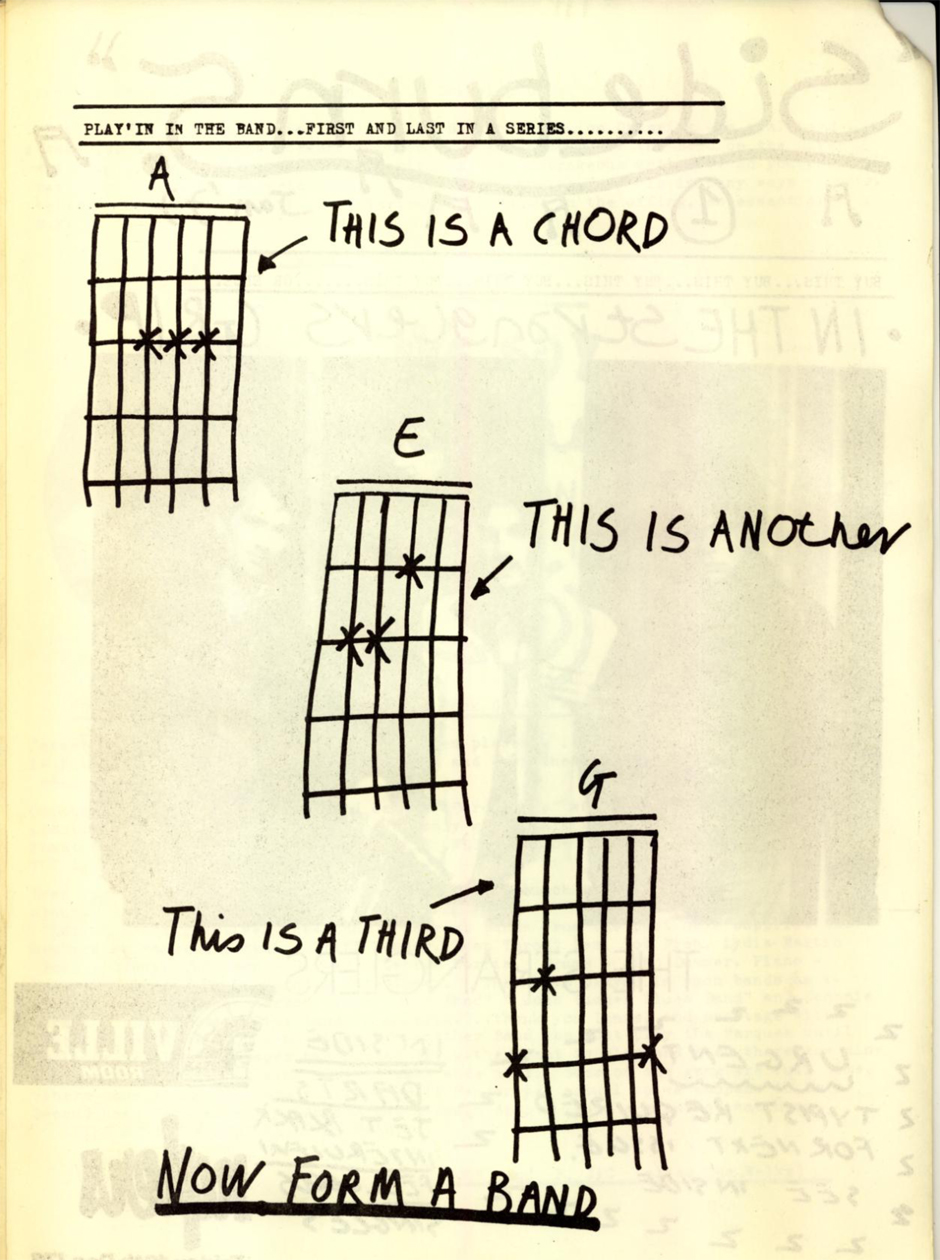
This image was from the fanzine ‘Sideburns’, though in common memory it is usually remembered as being associated with Sniffin’ Glue but it wasn’t that fanzine wot done it. Punk a reaction against the skilled overblown prog rock of the early to mid seventies was an attack on ability and artistry, it was a sonic and visual kick in the groin for the hi fi geeks listening to their ELP whilst smoking a joint and sitting on bean bags. Mark P begins his editorial in the first edition of Sniffin’ Glue like this:
The Ramones were in London this month and to realy [sic] get into the fact we’ve put this little mag/newsletter together. It’s a bit amateur at the moment but it is the first go isn’t it, I mean we can’t all be Nick Kents over night can we.
This was the ethos. Just do it. It’s this excitement that the best free schools seem to have – a kick back against the big prog establishments – and it’s why I like them. They get on with it, and find their way. They are creative institutions. They don’t wait for education experts, they won’t go knocking at the door of the edu equivalents of Roger Waters or Rick Wakeman to ask them what to do and how to do it, they’re going to do it their way and do it now. Here are three likeminded people, none of ’em are Nick Kents – now form a school.
Yesterday, I was fortunate to attend an excellent day of debates at Michaela Community School. Each debate got me thinking as each one covered critical ground. It was the one between Guy Claxton and Daisy Christodolou that got me thinking about the theme of this blog, how much knowledge does one need before one can be creative? When is one ready ‘to do’? Clearly after three chords it would be impossible to form Genesis but it might be possible to form a band. Will the band get better, will they live long in our collective memory, will they produce work of quality, will they last in the competitive world of the pop business? Will they be better than Genesis?
How much do you need to know before you can begin to learn to do? In my book, Trivium 21c, this becomes a crucial question, I interviewed Ferdinand Mount about it and he said that although children need to learn how to think and argue that this should not be something that occurs before the age of 16. He went on to say:
The golden years of maximum brain activity should be spent in absorbing, in reading and listening to every conceivable source of knowledge. And rote learning, in all its forms, is an essential discipline in acquiring intellectual muscle. [p.184]
When should a child, in a school, begin to think, argue, test out, and/or refine their work? At what point do we move from the absorption of knowledge to the questioning of it? At what point do we know enough in order to *be* creative? Is this subject specific? Is this down to the individual teacher? Should this be enshrined in a curriculum? Is there a difference between practical and more traditionally ‘academic’ subjects in how teachers might approach the now or never or later of getting pupils to be creative?
Is it better to learn to be a teacher by studying the theory for a few years or by stepping into the classroom as soon as is possible? “Here are three ideas about how to teach – become a teacher…” Or are the years spent absorbing the subject a good enough grounding in order for you to be an expert from day one?
I don’t think any of the answers to these questions are easy but if you believe that creativity is an important outcome of schooling then what you do might influence how creative your students might end up in your subject. If a music teacher just teaches her pupils to read music and play all the notes in the right order then her charges might be good musicians but should she teach them how to create, should she teach her pupils how to compose music and, if so, when? If she leaves it until they are sixteen is it too late? It certainly is too late for those who gave up her subject at the end of year nine…
What of those who know next to nothing, can they be truly creative with only three chords at their disposal? I would say they can be, they might be able to make a blistering song or two but their oeuvre might be somewhat limited after a time. Even the Ramones used more than three chords.
But Genesis were always dreadful.


 Trivium 21c ltd.
Leave a reply to Creativity, education and hip-hop | teachingmusicking Cancel reply